Water Damage Mitigation & Drying
Roof leaks, storms, and burst pipes soak into drywall, floors, and insulation. We extract the water, remove wet materials, and dry your home before mold takes hold.
When Water Gets Inside, Wet Materials Must Come Out, Fast
Roof leaks, storms, and burst pipes soak into the materials your home is built from. Once they are wet, the clock is ticking.
Mold Grows & Spreads Like a Cancer
When drywall, hardwood, soft flooring, and insulation get wet, mold can start growing within 24 to 48 hours, and it doesn’t stay put. It spreads through wall cavities, under floors, and into framing, quietly destroying your home and your air quality.
The only way to stop it is to remove wet materials immediately and get professional mitigation equipment into the property to dry everything as fast as possible.
Water wicks into drywall, flooring, insulation, and framing.
Mold can start growing on damp, porous materials.
Growth spreads behind walls and under floors. Repairs get bigger and more expensive.
What Water Does to Your Home
Drywall
The paper facing feeds mold. Wet drywall softens, sags, and grows mold inside the wall where you can’t see it.
Hardwood Flooring
Wood absorbs water, then cups, buckles, and warps. Moisture trapped underneath breeds mold on the subfloor.
Carpet & Soft Flooring
Carpet and pad hold water like a sponge. Saturated padding usually must be removed to stop odors and mold.
Insulation
Wet insulation stays wet, loses its R-value, and becomes a mold breeding ground inside walls and ceilings.
Subfloor & Framing
Water that reaches the wood structure can lead to rot and hidden mold if it isn’t dried properly.
Trim, Cabinets & Baseboards
Pressed wood and MDF swell and fall apart when wet, and they trap moisture against the wall.
Our Water Mitigation Process
Stop & Extract
We stop the source of water and extract standing water right away.
Remove Wet Materials
Saturated drywall, insulation, carpet pad, and flooring that can’t be saved are removed immediately.
Set Drying Equipment
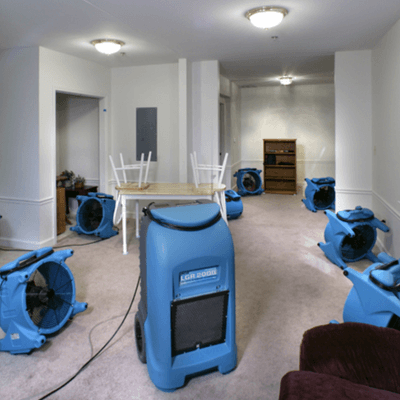
Air movers and commercial dehumidifiers go in to dry the structure as fast as possible.
Monitor Moisture
We check moisture readings until materials are verified dry, not just dry to the touch.
Treat & Protect
Affected areas are treated with antimicrobial to help prevent mold from coming back.
Rebuild
Once dry, our team handles the interior restoration: drywall, insulation, paint, and floors.
Mitigation Equipment On Site, Fast
Water Extraction
Pulls standing water out of floors and carpet.
Air Movers
High-velocity airflow speeds up evaporation.
Dehumidifiers
Commercial units pull moisture out of the air.
Moisture Meters
Find hidden water and confirm materials are dry.
Need the roof secured first? Jump to Roofing Mitigation →
Other Emergency Services
Fire, storms, and leaks rarely cause just one kind of damage. Whatever you’re dealing with, our team handles it all.
Roof Tarping & Storm Damage
Emergency tarps, temporary roof repairs, and rapid storm damage response to stop water from getting in.
View Roofing Mitigation →Emergency Board-Up
Secure broken windows, doors, and damaged walls after storms, fires, break-ins, or vehicle accidents.
View Board-Up →Fire & Smoke Damage
Board-up, roof tarping, soot and smoke cleanup, odor control, and removal of water left from firefighting.
View Fire Mitigation →Mold Remediation
Containment, removal of contaminated materials, HEPA air filtration, and antimicrobial treatment.
View Mold Remediation →Not Sure? Call Now.
Talk to our emergency team 24/7. We’ll tell you what needs to happen first and get a crew on the way.
443-977-1494 →Why Mitigation Service Is Important
Emergency mitigation services are critical because they stop additional damage immediately after a storm, fire, or water loss. Temporary measures such as roof tarping, board-ups, and water extraction help protect the structure from further deterioration while permanent repairs are being planned. Acting quickly can significantly reduce repair costs, help prevent mold growth, and preserve the integrity of the property. Prompt mitigation also demonstrates that the property owner has taken reasonable steps to prevent additional damage, which is often an important part of the insurance claims process.
Insurance Documentation
We photograph all damage, provide a detailed damage report, and document any emergency mitigation services to assist with your insurance claim.
Emergency Mitigation Questions
Can’t I just dry it out with a few household fans?
Why do you have to remove wet drywall and insulation?
Will insurance cover emergency mitigation?
How long does the drying process take?
Do you handle the repairs after mitigation?
Emergency? Call Now.
Every hour counts. The faster we secure the roof, board up the openings, and dry the inside, the less damage, mold, and cost you deal with.
443-977-1494