
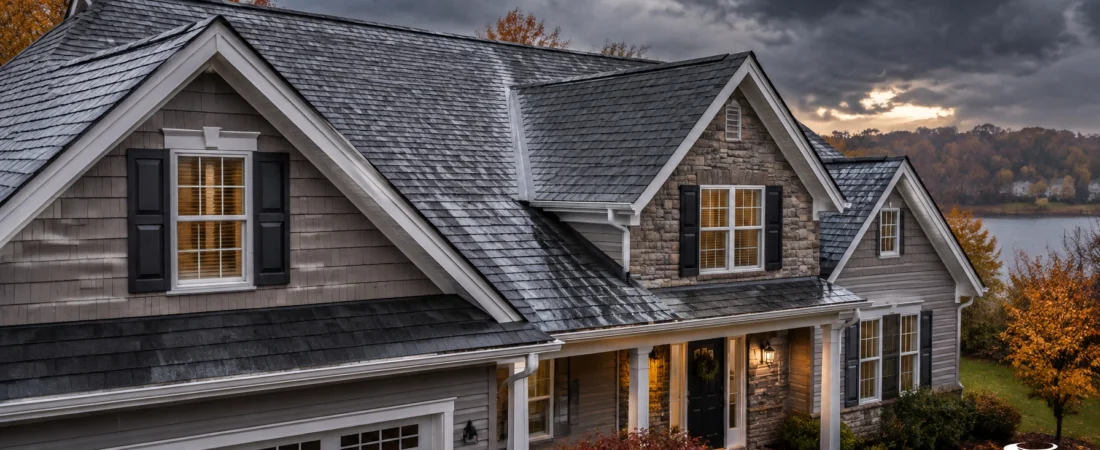

El Niño is expected to influence the 2026–27 winter weather pattern. Current outlooks indicate that Southern Maryland may experience above-normal precipitation, frequent storm systems, strong winds, and changing conditions between rain, ice, and wet snow.
For homeowners in Charles, St. Mary’s, Calvert, and Prince George’s counties, this pattern may increase roof risks. The main concerns include hidden storm damage, wind-driven rain, clogged gutters, ice dams, and failed flashing.
The seasonal forecast is not a prediction for every storm. It is a broad outlook. Roof damage will depend on the condition of each roof and the strength of individual weather events. However, preparation before winter can help reduce problems.
What El Niño May Mean for Southern Maryland
According to the National Oceanic and Atmospheric Administration’s El Niño information, El Niño develops when warmer-than-normal ocean temperatures occur in the central and eastern tropical Pacific Ocean. This condition can change the position of the jet stream and influence winter storm tracks.
Current outlooks show a wetter pattern for parts of the Mid-Atlantic. The Cornell El Niño regional outlook also identifies Southern Maryland and nearby areas as locations that may have an increased chance of above-normal precipitation.
This may result in:
- More frequent rain events
- Stronger coastal storm systems
- Wind-driven rain
- Occasional ice or wet snow
- Rapid changes between rain and freezing conditions
- Increased gutter and drainage demands
The USGS discussion of strong El Niño impacts notes that strong El Niño conditions can support a wetter winter pattern along parts of the Atlantic coast.
This does not mean every home will have roof damage. It means that weak areas may be exposed more often.
How El Niño Roof Damage 2026 Could Affect Homes
The phrase “el niño roof damage 2026” refers to the types of roof problems that may occur during a wetter and more active winter. Most damage begins with small defects that are not repaired before the weather changes.
Common problem areas include:
- Loose or missing shingles
- Cracked sealant
- Damaged pipe boots
- Open or deteriorated flashing
- Clogged gutters
- Blocked downspouts
- Weak areas around chimneys and skylights
- Previous wind or hail damage
- Poor attic ventilation
- Damaged underlayment
A roof may appear normal from the ground while still having damage. Small openings can allow water to reach the roof deck, insulation, walls, or ceilings.
Schedule a Pre-Winter Roof Inspection
A pre-winter inspection is one of the most practical steps homeowners can take. The inspection should include the roof surface, flashing, gutters, ventilation, and attic areas when accessible.
The inspection should look for:
- Shingles that are lifted, curled, cracked, or missing
- Granule loss in gutters
- Exposed fasteners
- Damaged ridge caps
- Loose metal flashing
- Gaps around vents and chimneys
- Water stains in the attic
- Soft or sagging areas
- Moss or debris holding moisture
- Damage from earlier wind or hail events

Capital Roofing and Exteriors provides a free HAAG-certified roof inspection. The inspection can help identify visible and hidden storm damage before winter weather creates additional problems.
Homeowners should also take photographs of the roof and exterior before winter. These photos can provide a useful record if storm damage occurs later.
Hidden Storm Damage Requires Attention
Southern Maryland roofs may experience damage from wind, hail, falling branches, or heavy rain before a homeowner notices a leak.
Hail can create small impact marks in shingles. Wind can loosen shingles without removing them completely. A branch may damage a small section of the roof while leaving no visible opening from the ground.
Hidden damage can become more serious when exposed to repeated rain. Water may move beneath the shingles and enter the roof system through damaged underlayment or flashing.
A professional inspection is recommended after a major storm, especially when the property is in Waldorf, La Plata, Indian Head, Lexington Park, Leonardtown, California, Great Mills, Prince Frederick, Huntingtown, Dunkirk, Lusby, Chesapeake Beach, Bowie, Upper Marlboro, Fort Washington, Clinton, or Hyattsville.
Wind-Driven Rain Can Enter Weak Areas
Heavy rain is one of the main concerns for the 2026–27 winter. Wind changes the direction of water and can force rain beneath shingles, around flashing, and into small openings.
Wind-driven rain may affect:
- Roof edges
- Valleys
- Chimneys
- Skylights
- Plumbing vents
- Ridge vents
- Dormer connections
- Areas near damaged shingles

Flashing is especially important. Flashing is installed around areas where the roof meets another surface or structure. These locations include chimneys, walls, vents, skylights, and roof valleys.
If flashing is bent, loose, rusted, or improperly sealed, water may enter even when the shingles appear to be in good condition.
Clean Gutters and Downspouts Before Winter
Gutters and downspouts must be able to move water away from the roof and foundation. Leaves, shingle granules, and other debris can block the system.
Before winter, homeowners should:
- Remove leaves and debris from gutters.
- Clear downspouts.
- Check for loose or sagging sections.
- Confirm that water exits away from the foundation.
- Repair leaks at seams and end caps.
- Check that downspouts are securely attached.
- Remove debris from roof valleys and eaves.
A blocked gutter can cause water to collect near the roof edge. During freezing conditions, that water may create ice buildup and increase the risk of water entering beneath shingles.
Gutter maintenance is also important for siding, windows, exterior walls, and foundations. Water that does not drain properly can affect more than the roof.
Ice Dams and Wet Snow
Southern Maryland is more likely to experience a mix of rain, freezing rain, sleet, and snow than a long period of consistent snow. However, individual storms can still produce wet snow and ice.
An ice dam can form when heat escapes through the attic and melts snow on the upper part of the roof. The water can refreeze near the colder eaves and gutters. This creates a barrier that prevents normal drainage.
Water may then move under shingles and into the roof system.

To help reduce ice-dam risk:
- Maintain proper attic insulation.
- Confirm that attic ventilation is working.
- Keep gutters and downspouts clear.
- Repair roof leaks before winter.
- Do not use sharp tools or open flames to remove ice.
- Contact a qualified professional if ice buildup is extensive.
Ice dams are not caused by gutters alone. Roof design, attic temperature, insulation, ventilation, and weather conditions all contribute to the problem.
Consider a Roof Maintenance Plan
Some roof issues are easier to manage through scheduled maintenance. Capital Roofing and Exteriors offers bi-monthly and annual roof maintenance plans for homeowners and businesses.
A maintenance plan may include:
- Routine roof condition checks
- Flashing inspections
- Gutter and drainage reviews
- Inspection of roof penetrations
- Identification of minor repair needs
- Documentation of changing roof conditions
Regular inspections can help homeowners address small problems before they become larger repairs. They also support long-term roof protection.
What to Do After Winter Storm Damage
After a strong wind, hail, or heavy rain event, check the interior of the home for:
- Ceiling stains
- Damp attic insulation
- Dripping around vents or chimneys
- Peeling paint
- Damp drywall
- Water near windows or exterior walls
Do not climb onto the roof after a storm. Roof surfaces may be wet, icy, or unstable. A professional should inspect areas that cannot be safely viewed from the ground.
Capital Roofing and Exteriors provides storm damage assessments and insurance claim assistance. The company can help document damage and meet with the insurance adjuster for a fair assessment. Homeowners should report damage promptly and keep photographs, repair records, and related documents.
Prepare Before the 2026–27 Winter
The expected El Niño pattern may bring more rain and changing winter conditions to Southern Maryland. The best response is preparation.
Before winter, homeowners should:
- Schedule a free HAAG-certified roof inspection.
- Repair missing, cracked, or loose shingles.
- Check all flashing and roof penetrations.
- Clean gutters and downspouts.
- Review attic insulation and ventilation.
- Document the current condition of the roof.
- Arrange storm damage assistance if needed.
- Consider a bi-monthly or annual maintenance plan.
For roof inspections, maintenance, repairs, and storm damage assistance in Charles, St. Mary’s, Calvert, and Prince George’s counties, contact Capital Roofing and Exteriors.
Capital Roofing and Exteriors
Phone: 443-977-1494
Email: info@capitalroofingmd.com
Website: capitalroofingmd.com
© 2026 Capital Roofing and Exteriors. All rights reserved. Seasonal weather information is general in nature and is not a guarantee of specific winter conditions or roof damage.
